Kujo SSG vs Etch Studio: Skip the Builder, Keep the Files
An MIT-licensed static site generator made for AI agents to drive. It's new, so start it on your own site.
Etch Studio sells you a visual builder for $590 a year on the annual plan, or $708 if you pay monthly.
Kujo SSG asks a ruder question. If an AI agent is writing the code, why do you need a builder at all?
A generator, not an editor
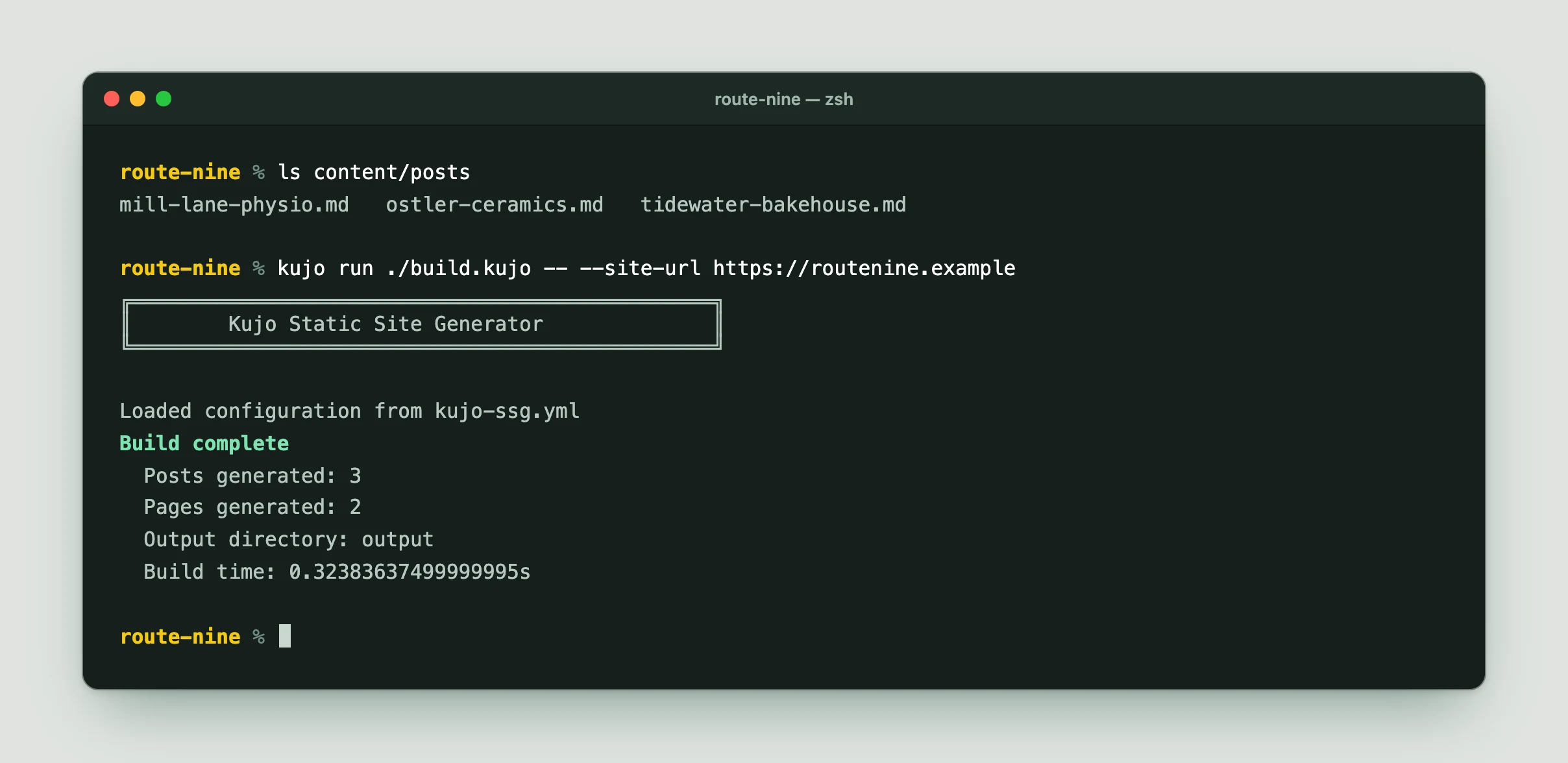
There’s no canvas here. You write Markdown, templates and assets, and Kujo turns them into a static site.
The README lists pages, blog posts and custom collections with their own taxonomies. It produces sitemap.xml, robots.txt and an RSS feed, and it writes canonical, Open Graph, Twitter Card and JSON-LD tags for you. There’s pagination, featured-image processing and a docs-site starter with local search.
Everything stays in the repo: “Content, templates, assets, metadata, feeds, and validation stay visible in the repository.” Builds are deterministic, so the same input gives the same output.
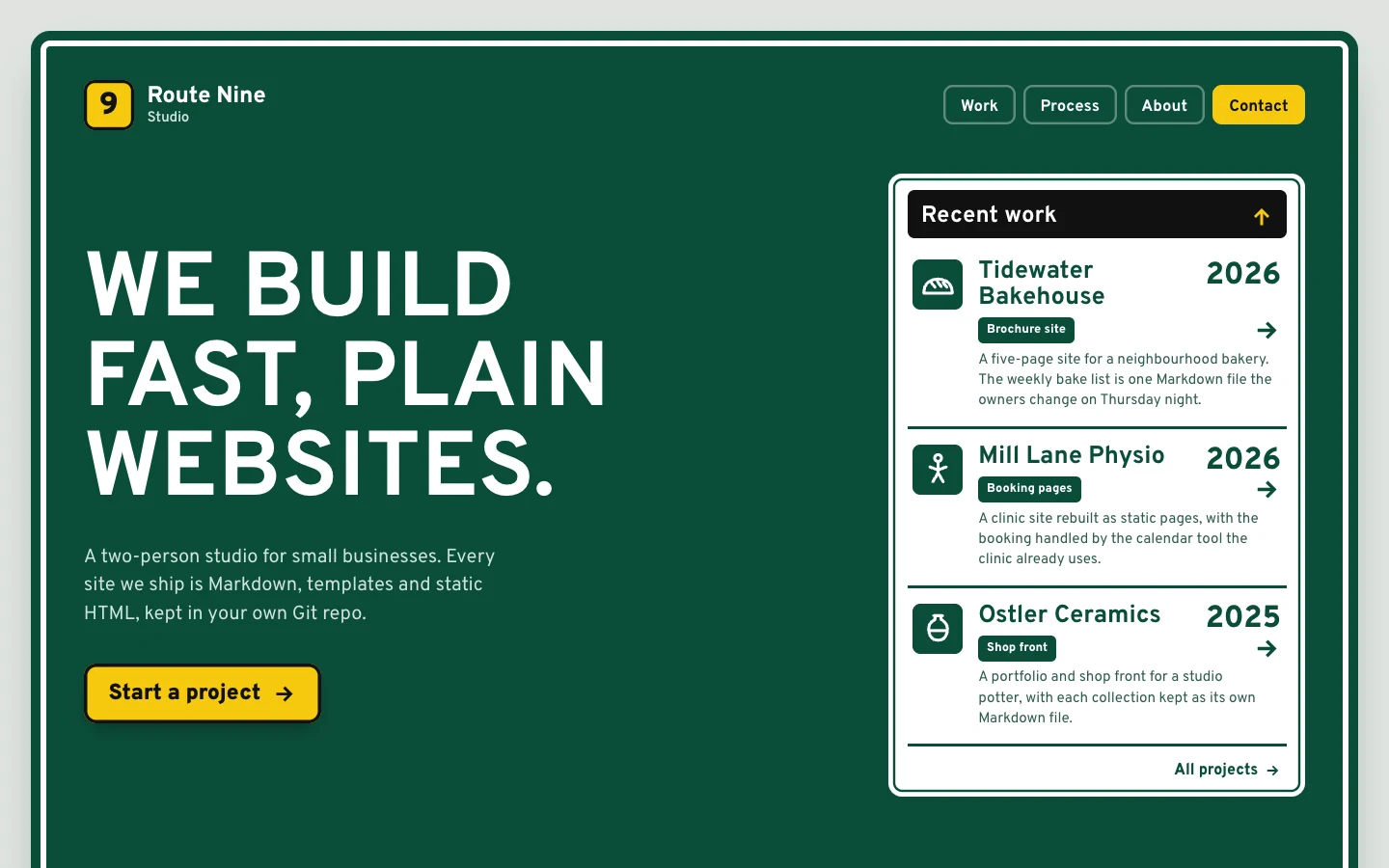
That’s the opposite of a builder. Nothing lives inside an app you have to keep paying for.
Made for agents to drive
This is the part that makes it more than another static site generator.
Kujo ships what it calls “an executable local Ability pack for project inspection, generated-output validation, and an approval-gated, idempotent build.” Agent and MCP hosts can register it and run those jobs.
So Claude Code, or whatever agent you already use, can check the project, validate the output and run the build through a defined interface. It doesn’t have to guess at shell commands.
One thing to know about “approval-gated”: the integration docs say “Hosts must supply the canonical policy and approval/idempotency services.” You wire the approvals up yourself. The pack also has no deploy step, so publishing is your job.
It’s free, and the licence says so
The code is MIT. You can use it, change it and redistribute it. The README says it’s “Not a hosted-service or paid-API dependency by default.”
There’s no lifetime deal to argue about, because there’s nothing to buy. Etch’s FAQ says Etch Studio “won’t be a lifetime deal”.
It’s new
GitHub shows the repo was created in June 2026, and it has shipped steadily since, from v1.0.0 in August to v1.2.1 in October. It doesn’t have an outside community yet, so you’d be one of its first users.
It’s upfront about its scope. The README calls itself a “Local static-site generation showcase for Kujo projects”. Under “What This Repo Is Not”, it lists “Not a production-certified docs platform” and “Not an automatic deployment or hosted publishing service”.
You need the Kujo CLI on your PATH. It’s a single download, and a new runtime to get to know. Minified builds also need esbuild, and cwebp is optional, for smaller images.
Worth knowing: “Experimental public read-only WebMCP remains enabled by default.” Generated sites expose it unless you switch it off, so check the build options before you ship.
Who it’s for
If you’re happy in a terminal and you want an agent doing the typing, Kujo is a free way to see how far that goes. Start with your own site or a side project, and bring it to client work as it matures.