OpenPage vs Etch Studio: Your Whole Site in One JSON File
A free, MIT-licensed builder where the editor, the AI and the renderer all share one JSON file. It's a sharp idea, but the repo has been quiet since March.
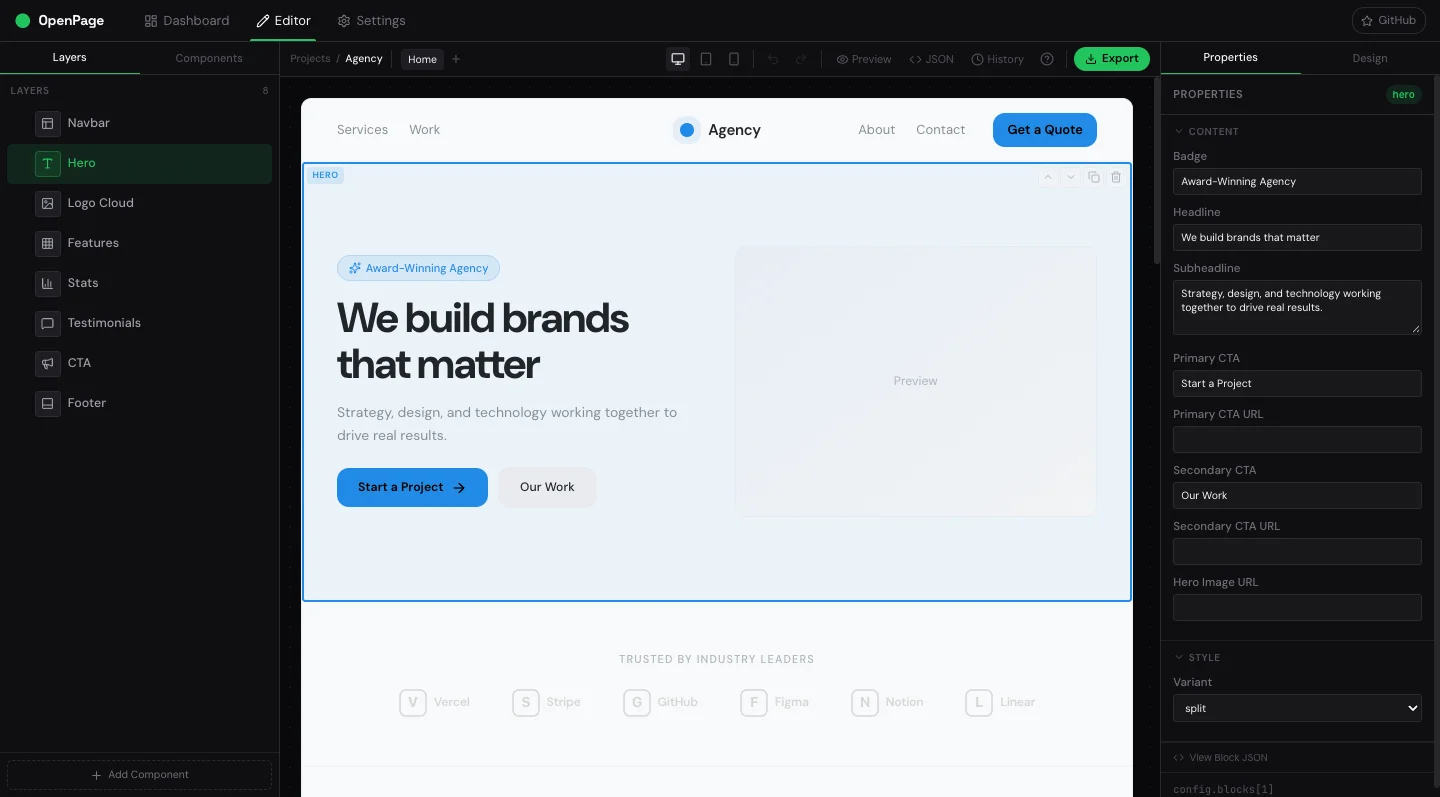
Etch Studio costs $590 a year on the annual plan, or $708 if you pay monthly.
OpenPage costs nothing. Search for the name and you’ll find several unrelated projects, so use that link. The one I mean is Federico De Ponte’s, under the MIT licence.
Your site is a JSON file
This is the idea worth stealing.
The site is one structured JSON file. The README puts it plainly: “The visual editor reads and writes this JSON. The AI endpoint generates it. The renderer turns it into a live page.”
That means your site is “clean, diffable, version-controllable JSON”. It goes in Git. You can read a diff of what changed. A script, or an agent, can edit the file directly, because it’s just a file.
You build from 19 block types with 42 layout variants. That covers most sections a small business site needs.
Gemini, and only Gemini
Type a prompt and OpenPage generates a site config through Gemini. The model ID is fixed in the code.
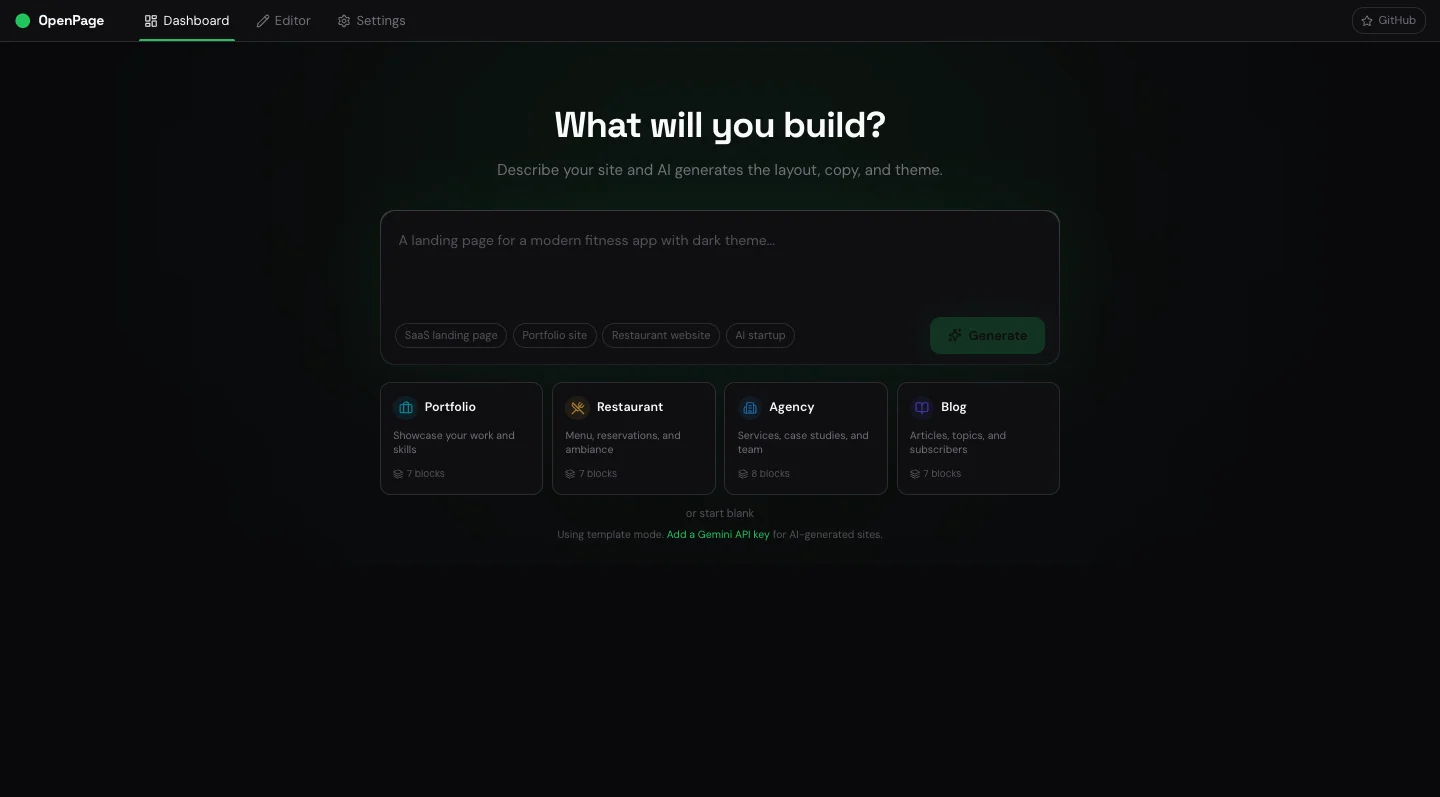
The README says you can “swap in any LLM that supports structured/JSON output by modifying the API endpoint.” Read that as: change the code. Out of the box it’s Gemini, on your key and your bill.
The README oversells the API. It says “AI agents can make surgical edits via API”, but the shipped API only generates whole sites. There’s no edit route. The agent panel was removed from the editor on 6 March 2026. An unused AgentPanel.tsx demo component remains in the repo. Its own source says “Pattern matching for demo agent responses”. It calls no model.
So the AI really does one thing: it generates a first draft. For edits after that, point your own agent at the JSON.
Running it
Clone it, run npm install && npm run dev, and the editor runs locally. The AI part needs more. It runs as a serverless function, so you “deploy to Vercel” or adapt it to another backend.
The README says “There are no usage limits, no paid tiers, and no telemetry.”
Export is one click, to static HTML you can put on Vercel, Netlify, GitHub Pages, S3 or your own server.
Where it gets awkward
Look at what the export loads before you use it for a client. The exporter writes in <script src="https://cdn.tailwindcss.com"></script>. That’s Tailwind’s Play CDN, and Tailwind’s own docs say it’s “designed for development purposes only, and is not intended for production.” Every visitor’s browser builds the CSS on page load.
And it looks parked. GitHub shows the repo was created on 26 February 2026 and last pushed to on 7 March. That’s nearly eight months with no commits. It isn’t archived, but nobody’s moving it forward either.
If you take it on, plan to fork it and own the fixes yourself.
Why it’s still worth a look
Etch Studio wants $590 a year for a visual builder. OpenPage shows the shape that tooling should take: one open file that people, the editor and the AI can all read. It’s free.
Take the idea, even if you don’t take the code.